At a time when the pursuit of maximum efficiency guides industrial operations, investing in an automatic baler at the end of the line is key to achieving better results.
At a time when the pursuit of maximum efficiency guides industrial operations, investing in an automatic baler at the end of the line is key to achieving better results.
When properly applied, it accelerates the grouping of packages, while also eliminating bottlenecks, reducing costs and improving logistics performance.
The impact is direct: more volume shipped, less waste and a production system that flows without interruptions.
Read the article and see where these gains really happen and why companies that have automated this stage are closer to technical efficiency.
1. High productivity without bottlenecks at the end of the line
Every line seeks to achieve maximum productivity. That is why companies invest in good packing and bagging machines. It is an excellent measure.
However, in most industries, the limit goes beyond primary production. Sometimes, the challenge is in the stage of product conditioning for shipping.
Without automation at this stage, the scenario is predictable: accumulation of ready packages that need to wait for the baling process.
In automatic baling, this bottleneck disappears.
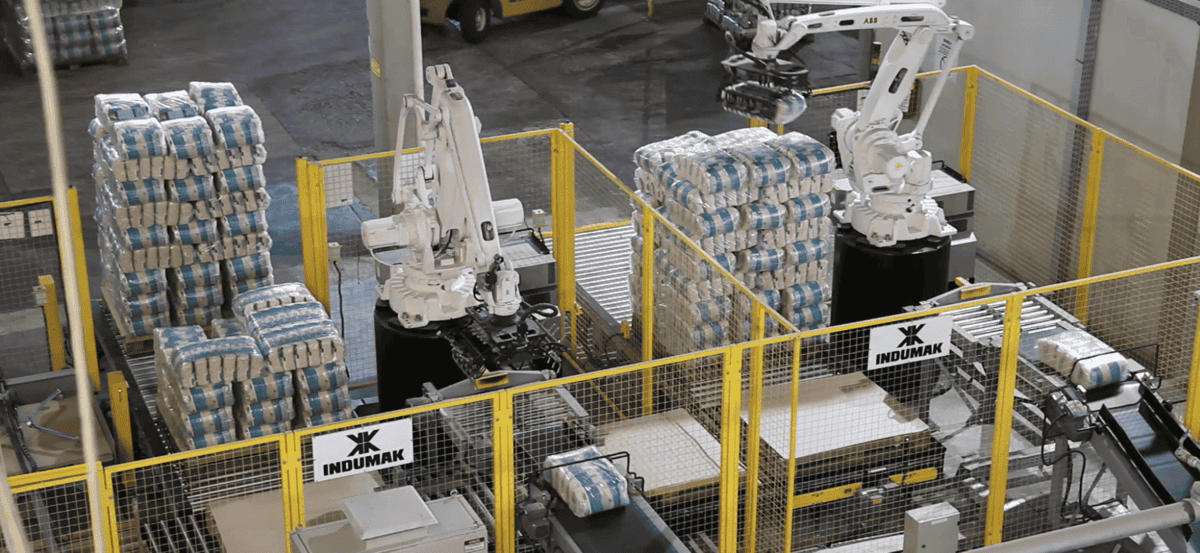
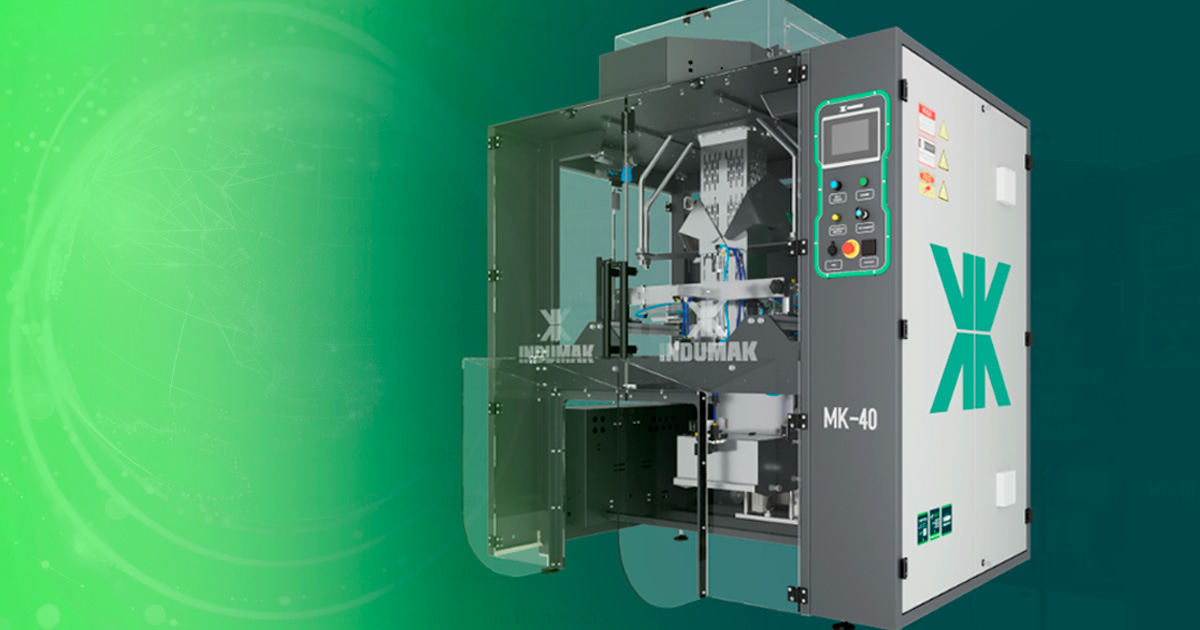
Modern machines, such as Indumak’s MK-30, produce up to 1200 bales per hour.
Thus, fast load unitization keeps up with speed without creating queues or interruptions.
The result soon appears:
- Direct increase in volume shipped per hour;
- Less need to expand structure or staff;
- Revenue gain at the end of the month.
And, when integration is at its highest, with machines working harmoniously, safety, savings and efficiency increase.
Watch the video below and see Indumak’s DG-4 packing machine and MK-30 baler operating together in the rice industry.
2. Cost reduction where the operation really loses money
When dependence on manual labor is high, the operation is constantly under pressure. This creates inconsistency in the bales and consumes time, especially with rework.
The installation of an automatic baler greatly reduces this instability.
Grouping is then carried out in a precise and repeatable way, maintaining a constant standard throughout the entire production.
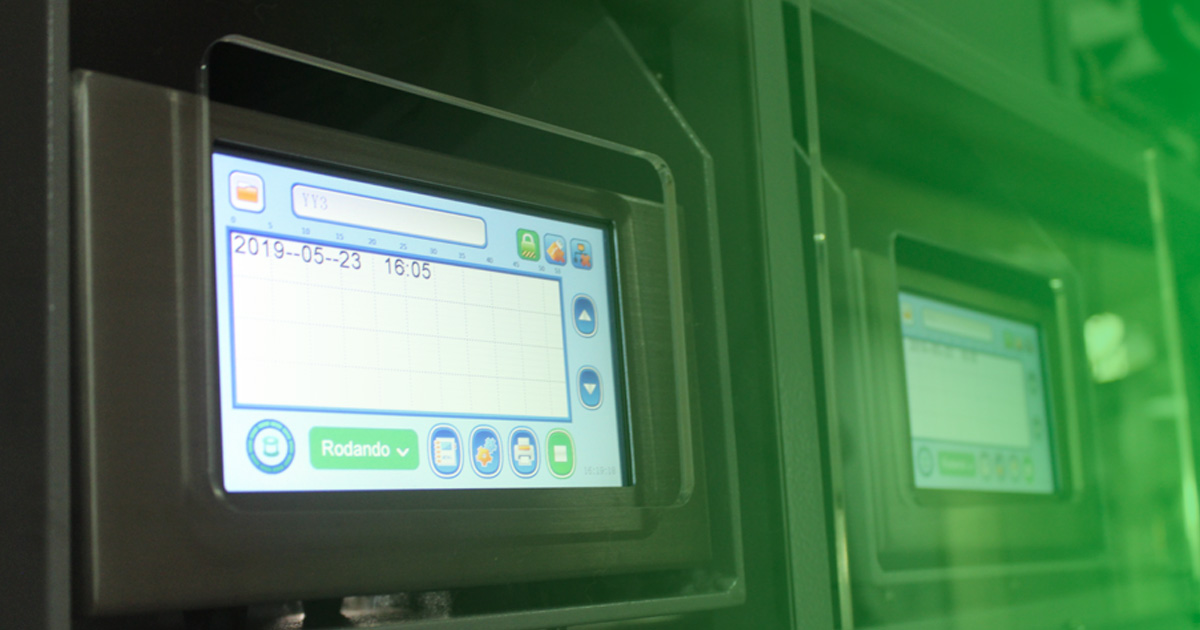
Continuous physical effort gives way to operation monitoring through the HMI (touchscreen panel).
As a result, the activity can:
- Reduce wear and strain;
- Decrease failures;
- Allow the operator to perform more technical tasks.
3. Flexibility to keep up with different demands
The industry requires constant adaptation. Products change, packaging varies and rules become stricter.
The operation must keep up with this pace, including at the end of the line.
When the equipment is not flexible, every change requires adjustments. And this invariably turns into downtime.
Indumak’s automatic balers avoid this problem.
They are configured for different bale formations, with one, two or three columns, as well as side or rear infeed options and even vertical product positioning.
4. Operational safety and compliance with standards
In addition to being inefficient, the manual process exposes the activity to constant risks, especially for workers.
Repetitive movements, intense effort and load handling increase the likelihood of absences, reduced performance and even labor issues.
Investing in a good automatic baler reverses this scenario.
The machine takes on the heavy work within a controlled environment. The operator interacts with the system through commands and monitoring.
In addition, Indumak balers feature SAE 1020 carbon steel structure and AISI 304 stainless steel components, in addition to fully meeting NR-12 requirements.
The operation naturally becomes safer and has fewer interruptions, while the worker operates under more appropriate and ergonomic conditions.
To understand which configuration makes sense for your company, download the Indumak catalog.
5. Less waste and greater logistics efficiency
It is common for companies to be concerned about reducing waste, especially in the dosing and packing stage. This is essential and a relevant concern.
However, waste goes beyond raw material handling. It is also in the way the process is finished.
When imprecise, baling:
- Increases plastic film consumption;
- Creates irregular and imprecise bales;
- Makes transport and storage more difficult.
On the other hand, sustainable baling groups the material with precision, standardizes the bale format and improves load organization.
Palletizing is made easier, while space usage is optimized and the risk of damage during transport is reduced.
The effect is cumulative: fewer inputs consumed, lower loss volume and reduced logistics cost.
Invest in Indumak balers
Recognized as the fastest automatic baler in the world, the MK-30 maintains a constant pace in bale formation, ensuring that the end of the line keeps up with the real production capacity, as seen in the video:
The operation is more efficient, with greater shipped volume and full control over process performance.
If your industry needs speed, consistency and scale, Indumak has the right equipment.
Credits: INDUMAK | Pró-Terra Partner
Check it out on the INDUMAK blog